

 January 22, 2026Angela Msumba & Noreen Ismail
Curious about what an Oftsed Pilot is like? In this blog, Angela Msumba, Owner, Director & Manager of Heart Preschool and Childminder Noreen Ismail share with us what their recent Ofsted Pilots were like and top tips that can be useful to help you prepare!
Recently, I had the privilege of taking part in an Ofsted pilot, and I found the experience to be both constructive and supportive — a refreshing shift from the previous inspection model. What stood out most was the focus on well-being — not just for children, but for leaders and practitioners too. It was clear that Ofsted is moving towards a more holistic and reflective approach, one that recognises the importance of nurturing those who nurture others.
Launched in November 2025, the new Ofsted inspection framework looks very different from what we’ve known before. The familiar single-word judgements — Outstanding, Good, Requires Improvement, and Inadequate — will be replaced with a detailed report card. This new approach will provide a broader picture of a setting’s strengths and areas for growth, rather than reducing the outcome to a single label.
There will be 11 distinct areas within the report card:
• Curriculum
• Developing Teaching
• Leadership and Governance
• Behaviour and Attitudes
• Attendance
• Personal Development and Wellbeing
• Achievement
• Inclusion
• Safeguarding
Each of these areas will be evaluated on a five-point scale, except for Safeguarding, which will simply be judged as Met or Not Met. There is an early years toolkit available to help providers prepare for their inspections.
This change represents a positive step forward — one that feels far more developmental, reflective, and ultimately kinder. It encourages dialogue, growth, and shared responsibility rather than fear or competition.
I came away from the pilot feeling uplifted and hopeful about the direction our sector is heading in — one where well-being, professional growth, and a shared love for early years education are at the heart of inspection.

Having recently taken part in an Ofsted pilot inspection, I wanted to share my experience to help other childminders understand what the new inspection framework may feel like in practice, and how best to prepare.
Going into the inspection, I felt understandably nervous. The framework was new, and I had not fully digested every part of the toolkit (7 evaluation areas) beforehand. However, what stood out very quickly was how supportive the process felt and the interest in my wellbeing.
There are two parts to the inspection, the planning call and the actual inspection day itself.
For me, the planning call played a crucial role. It gave me the opportunity to set the context of my setting, talk through my provision, and explain the children attending. This helped build rapport with the inspector and created a shared understanding before the inspection day. The inspector even researched some of the training and accreditations I had done. I would recommend that you prepare for the planning call:
– have a crib sheet of your strengths
– areas for improvement and your action plan
– your curriculum and teaching
– the children’s journeys
– next steps
– your local area context
During the inspection itself, the focus felt very child-centred. The case sampling approach, involving two children, allowed me to naturally explain how I support inclusion, tailor teaching, and adapt my environment for the different age groups. If you do not have any SEND or Vulnerable children on roll, have examples to share from your past experience. The conversations were professional and reflective, allowing me to articulate why I do what I do and the impact it has on children.
One thing I found challenging was reflecting in depth on the spot, especially as I had not audited my provision against the toolkit beforehand. Looking back, my biggest tip would be to use the toolkit proactively: audit your setting, identify strengths, and consider where you would place yourself and why. Being able to confidently explain your practice makes the process feel far more manageable.
Overall, the pilot inspection felt fair, focused and genuinely interested in understanding my setting. With preparation and confidence in your everyday practice, the new framework is one that childminders can approach with reassurance rather than fear.
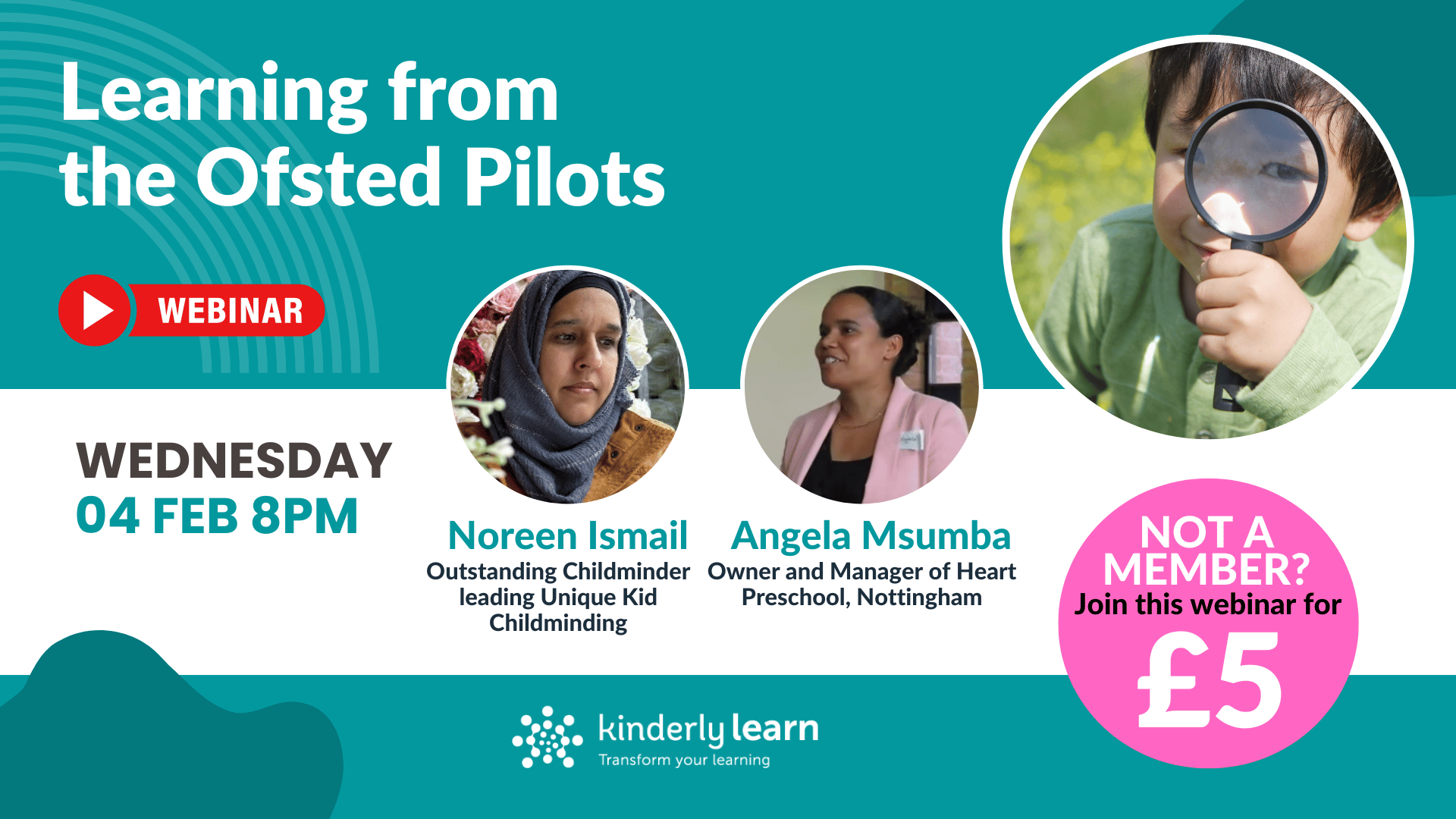
Angela Msumba
Angela Msumba is the owner and manager of Heart Preschool, bringing over 20 years of experience in Early Years Education. With a background as a former teacher and lecturer in Early years, Angela is passionate about nurturing young minds and fostering a love for learning.
Noreen Ismail
Noreen Ismail has over 15 years of experience and proudly runs Unique Kids Childminding, which has been rated Outstanding twice by Ofsted. She provides a nurturing, play-rich environment where children develop curiosity, creativity and imagination. She has previously worked as a Childminder Mentor for the Department for Education and for Manchester City Council as a Support Childminder, mentoring newly registered childminders.