

 February 24, 2026Tamsin Grimmer
The process of building synapses in our brains is strengthened by repetition: Repetition is a foundation of learning, allowing more synapses to be formed and myelination to take place. You could say that repetition is one way that humans are hard-wired to learn.
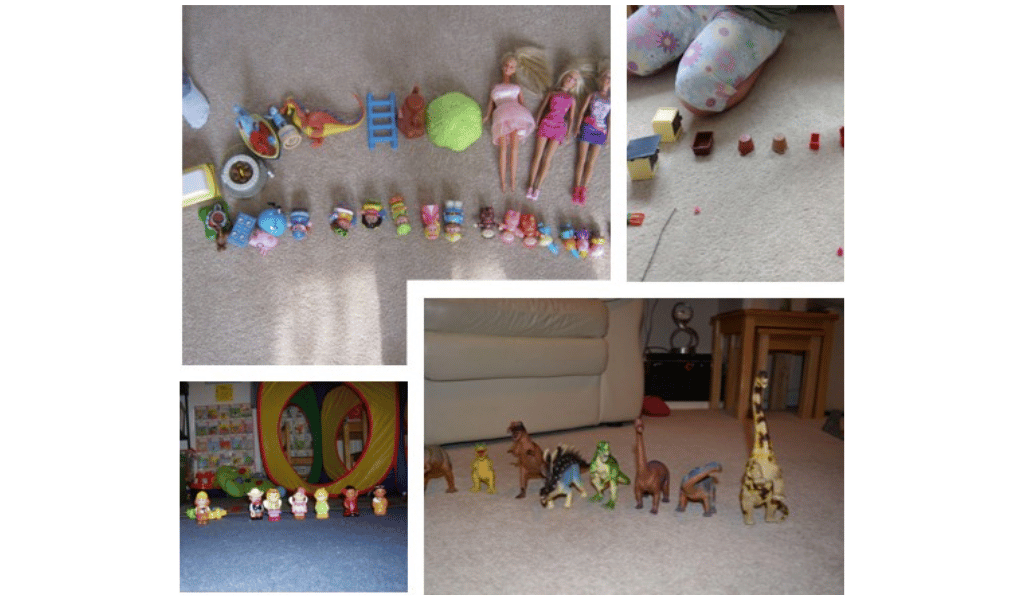
We may see children repeating certain patterns of play, again and again and again, for example continually throwing their cup from the high chair, or lining up their toys…
These representations and lines were all created by the same child at different times. She was interested in making horizontal lines and positioning toys and resources. We refer to this as schematic play.
And what better place to observe schematic play than in the block area! In this space children can build lines or towers, move materials around, construct with resources that connect in different ways, use blocks to fill and empty containers, create enclosures, sort, match and create patterns. In addition, block play allows children to foster their creativity and imagination. The possibilities literally are endless with this open-ended play. I love this quotation from Tina Bruce which highlights how much children are learning through block play:
“Block play offers children possibilities to apply their knowledge of mathematics, architecture, engineering, relating to others, having and developing ideas, making stories out of their constructions, feeling proud, concentrating and being engaged and focused in their learning – and more.” (Bruce, 2012: 26)
You can see that block play, combined with schematic play, is very powerful learning indeed.
However, although quality resources are important, the quality of our interactions is more important. As Tina Bruce said, “Rich block play does not just occur. It develops when the adult acts as a powerful catalyst working hard to enable it.” (Bruce in Gura 1992:26)
Therefore, the role of the adult in supporting children’s play is essential – we need to observe the children as they play, tune into them, pay attention, noticing what they are doing and how they are doing it, be genuinely interested in their play. Act like a researcher, analysing and thinking deeply about their play. Sometimes we will do this from afar, not wanting to interrupt their play, but at other times, we may like to scaffold, support and challenge children’s thinking, perhaps using ‘I wonder…’ comments to provoke exploration or further extend their play.
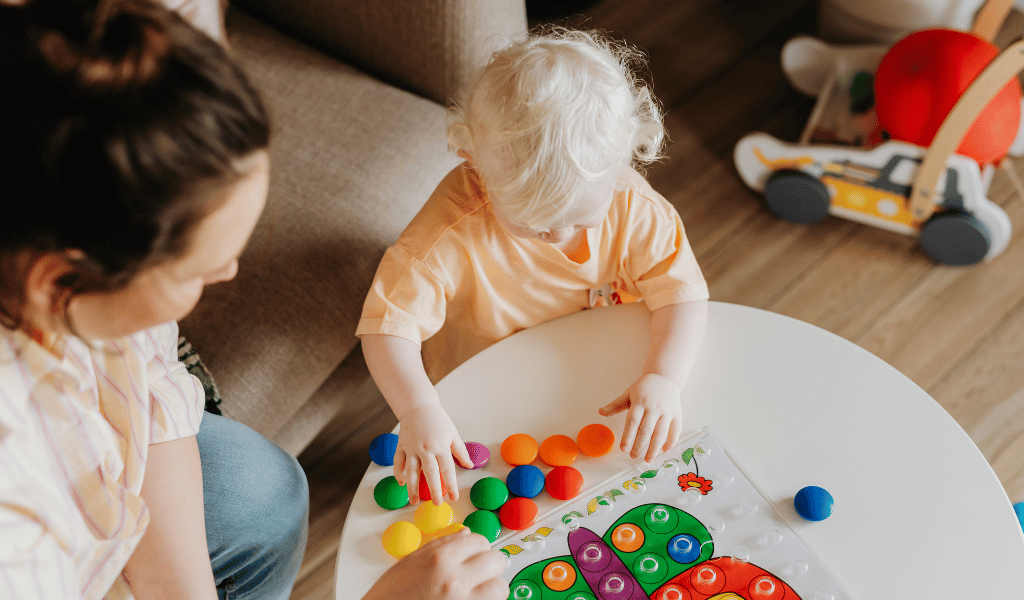
We might want to adjust the learning environment or set up provocations that will know will ignite curiosity and invite the children to explore different aspects of their investigation. Sometimes we are needed to role model skills or desired behaviours, remembering it is not our role to tell the children how to play with blocks and resisting the urge to take over their play, but offering suggestions if we deem it appropriate.
Lastly we should reflect upon our block play areas and our interactions within them:
Tamsin Grimmer
Tamsin Grimmer is a director of Linden Learning, an associate of Early Education, principal lecturer at Norland College and an Emotion Coaching Practitioner for Emotion Coaching UK. She has a wealth of experience supporting Early Years Teachers and educators. She is passionate about young children’s learning and has written several books aimed at educators and is a true advocate for adopting a loving pedagogy.
