

 May 8, 2026Ruth Lue-Quee (My Mummy Teacher)
As a former deputy headteacher, educational consultant and mum, Ruth Lue-Quee (My Mummy Teacher) has always understood the value of play.
“I knew the research, I had seen the outcomes, and I had watched children thrive when learning was active, hands-on and rooted in their development. But if I am honest, this became much more than a professional belief when it became personal.
When my own son was approaching the move from Reception into Key Stage 1, I could see the shift coming. I could see how quickly children are often expected to move from play-rich, developmentally appropriate practice into something much more formal. That was the moment this stopped being something I simply believed as an educator and became something I could not ignore as a mother. I often say becoming a campaigner was not on my 2025 bingo card, but once I saw it through both lenses, I could not unsee it.
That is why I launched the Play is Learning campaign.
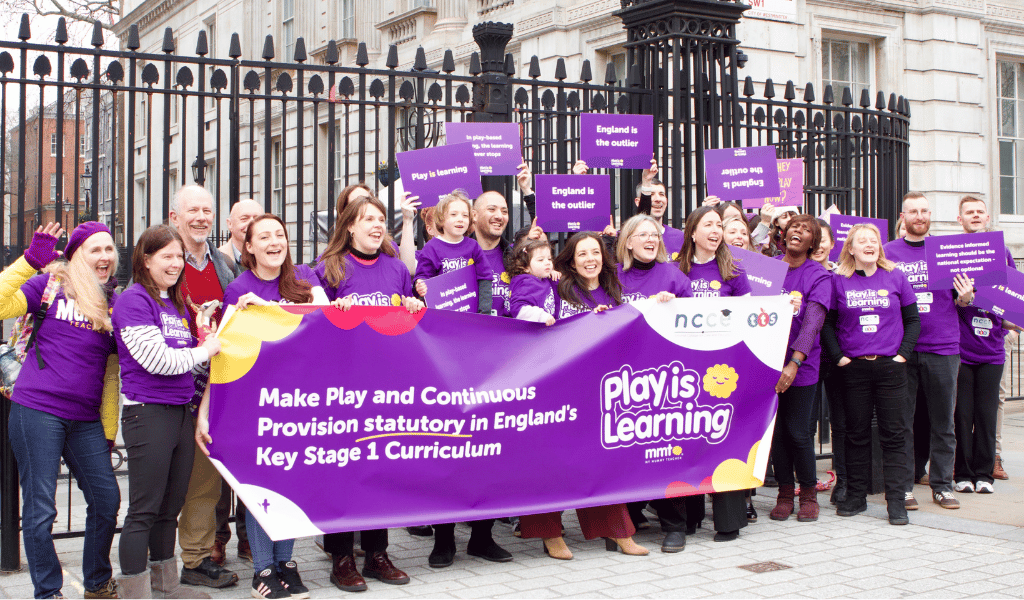
At its heart is a message I know Kinderly readers will understand deeply: play is not an extra. It is not a reward, a filler, or something children do before the ‘real learning’ starts. Play is how children make sense of the world. It supports communication, language, problem-solving, self-regulation, creativity, physical development and emotional wellbeing. It is not separate from learning. It is learning.
The campaign has real momentum now, but it remains constructive, credible and focused on practical change. My long-term ask has not changed: I want play and continuous provision to be statutory in Key Stage 1 in England. That is still the clearest way to create consistency, confidence and protection for developmentally appropriate practice. At the moment, though, we are also pushing for practical interim changes that could help schools now: meaningful involvement of KS1 practitioners and experts in the next stakeholder phase of curriculum review, a roundtable with ministers, and a clear pedagogical line alongside final curriculum content or supporting materials.
This matters because professional judgement only works when the wider system gives schools the clarity and confidence to use it. In theory, schools can embrace play-based learning in KS1. In reality, many practitioners know that support is inconsistent. That leaves too much to chance, leadership preference and local culture. It becomes a postcode lottery.
For those of you reading from elsewhere in the UK, or overseas, England is the outlier here. Play-based pedagogy is not statutory beyond the Early Years in England, despite decades of evidence and despite the fact that the transition from Reception to Year 1 can feel like a cliff edge for many children. That was recognised strongly in the Westminster Hall debate on 26 January 2026, which followed the campaign petition reaching 106,082 signatures. That debate was a major milestone, alongside speaking at the APPG on Play, the Downing Street petition hand-in, and the direct ministerial engagement that has followed. I also met with the Minister for School Standards in February, and the signals were positive, including support in principle for a roundtable and for practitioner involvement as the curriculum review moves forward.
But while policy matters, so does what happens in everyday conversations. Many of you will regularly face objections from people who do not understand the value of play. When that happens, I think it helps to respond calmly, clearly and confidently.
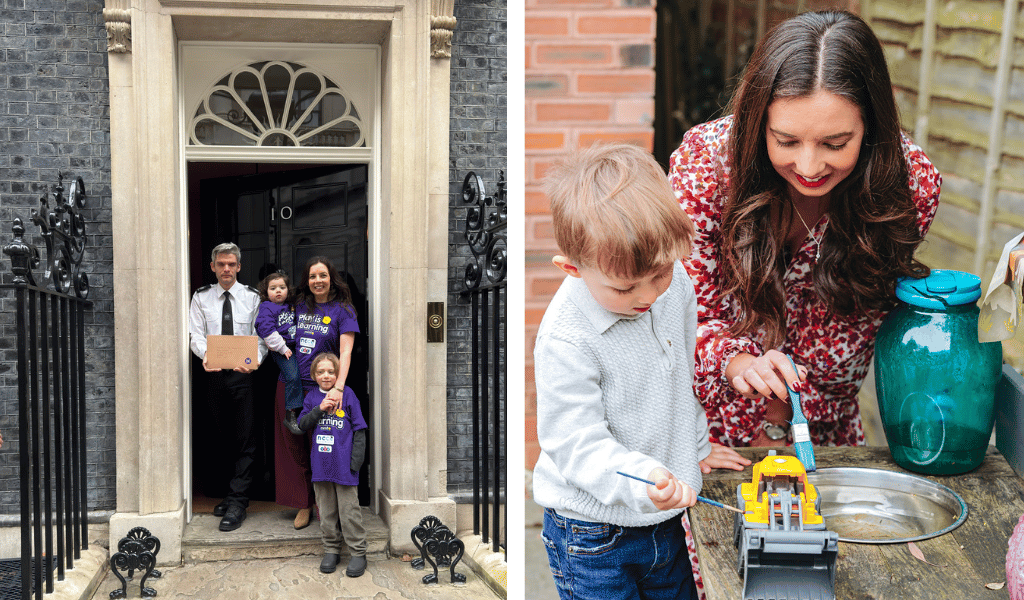
If someone says, “They’re just playing,” I would say: “Yes, and through that play they are developing language, executive function, social skills, resilience and understanding. Play is not the absence of learning; it is often the vehicle for it.”
If someone worries that play lowers standards, I would remind them that this is not about lowering expectations. It is about using developmentally appropriate pedagogy so children can reach those expectations more effectively.
And if someone says, “Children need to get used to formal learning,” I would argue that children need strong foundations first. Independence, attention, confidence, oral language and self-regulation do not appear by magic. They are built through rich, meaningful experiences, many of which are play-based.
We also need to keep play firmly on the agenda for all children, not only in early years settings but beyond them. That means being disciplined in how we talk about it. We need to keep linking play to outcomes people care about: communication, wellbeing, school readiness, engagement, attainment and inclusion. We need to document what we see, share case studies, use the language of child development confidently and keep advocating in ways that are evidence-led and practical.
It also means refusing to let play be positioned as something soft, outdated or optional. When we speak about play, we must do so with professional authority. We know what it enables. We know what children gain from it. And we know that children do not suddenly stop needing movement, exploration, imagination and interaction when they turn five.
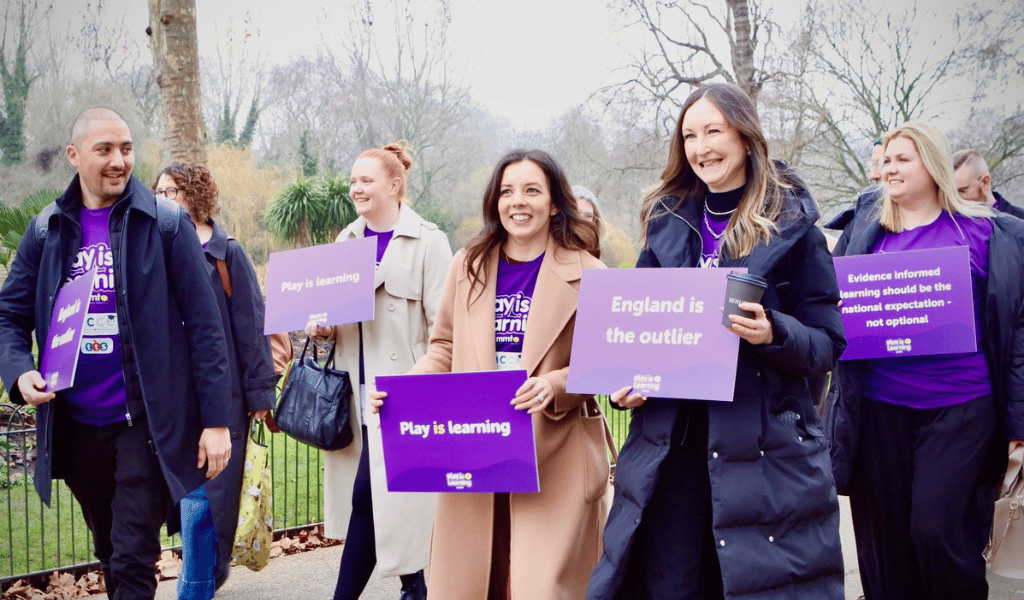
For me, this is now a mission. I want to help create an education system that truly values play and continuous provision and gives children what they need, not just what fits neatly on paper. And while I will keep fighting for structural change, I also believe every practitioner has power. Every time you advocate, explain, model, document and protect play, you help keep it on the agenda – thank you.
Play does not need defending because it is ‘a nice to have’. It needs defending because it is essential.
Discover the My Mummy Teacher website by clicking the link, to keep up to date with the Play is Learning campaign, for simple play-based ideas, realistic support and expert guidance to help make play and learning feel easier at home and in your settings.
About the author
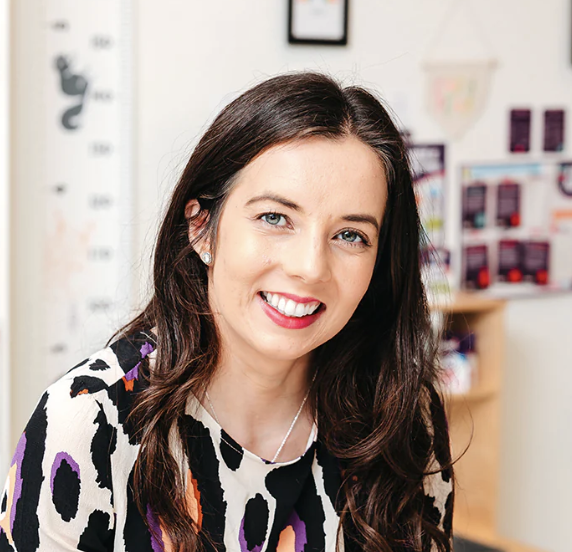
Ruth Lue-Quee, also known as My Mummy Teacher, is the founder of MMT Play, an award-winning education & play resources brand based in the West Midlands, UK.
As a highly qualified Educational Consultant and award-winning former Deputy Headteacher, Ruth brings extensive experience in both mainstream and Special Educational Needs education, with a particular focus on Early Years and Key Stage One.